Where we are
We are a global company
Headquartered in London, UK, with clients around the globe.
Where we are
Headquartered in London, UK, with clients around the globe.
Awaab’s Law
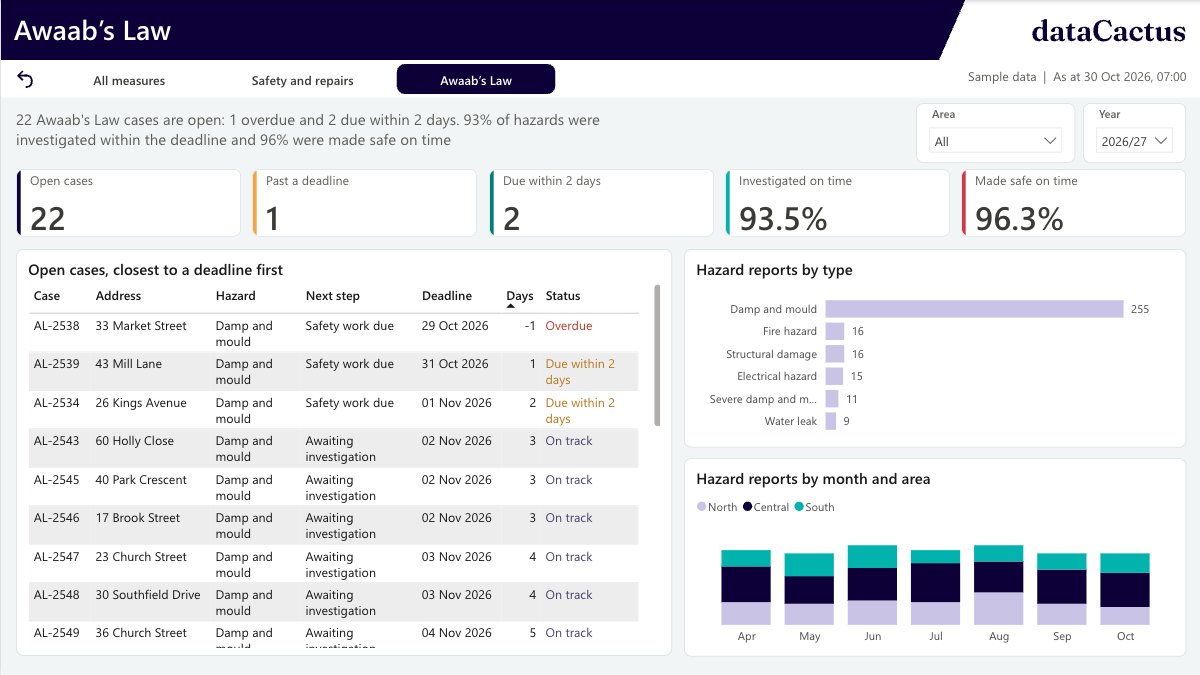
Every hazard case from report to repair, with each legal deadline worked out and the cases closest to breach at the top. Built on your repairs and housing systems, in Power BI, ready for Phase 2 on 30 November 2026.
Each step starts its own clock when the one before it finishes. These are the timescales social landlords in England work to.
From the GOV.UK guidance for social landlords. Your legal and compliance team decide how the rules apply to each case.
The report comes in through the contact centre, the inspection sits with a surveyor, the works order with a contractor and the letter with a housing officer. Nobody sees the whole case.
Each deadline depends on when the last step finished, in working days, and the next one starts from there. Spreadsheets get this wrong quietly.
A missed deadline usually shows up in a complaint or a disrepair claim, not on a list the week before.
Phase 2 brings more hazard types under the same deadlines, so the volume of cases on the clock goes up.
What we track
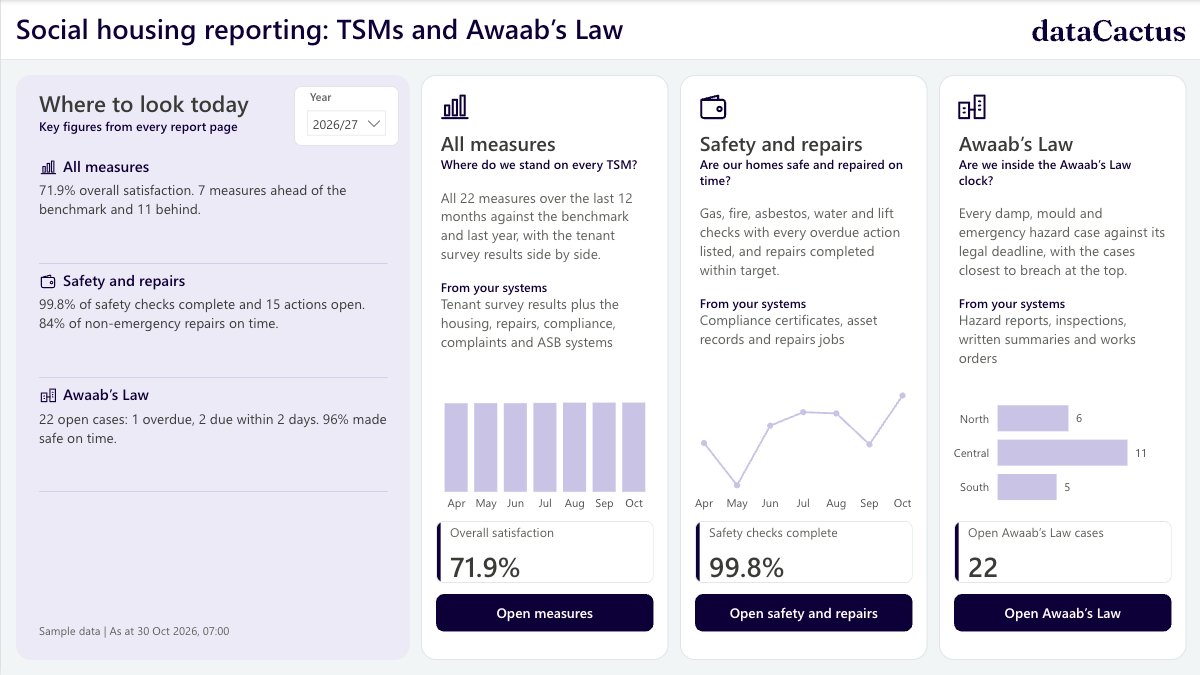
Your teams keep working in the systems they use today. The report joins them up and does the counting.
A working report on sample data for a landlord with 6,250 homes. Open the Awaab’s Law page to see open cases by deadline, or the other pages for the Tenant Satisfaction Measures.
 Open the live report
Hazard cases, repairs and complaints come from the same data as your TSMs, so both sit in one report and one set of figures.
Phase 2 of Awaab’s Law starts on 30 November.
Tell us where your hazard cases live today and we will show you what it takes to see every deadline in one place.
We use Google Analytics to see which pages are useful. No advertising. Cookies are only set if you accept; otherwise we count anonymous, cookie-free visits only.